

Most people describe their feelings using about five words: good, bad, fine, stressed, or tired. Sound familiar? It’s not unusual. But here’s the thing — when you only have a handful of emotional words, you can’t tell the difference between frustration and disappointment, or between calm and contentment. You’re living in emotional black and white when there’s a whole spectrum available.
Emotional vocabulary isn’t just about finding fancier words. It’s about precision. When you can name exactly what you’re feeling, you understand yourself better. You know what you need. And when you can communicate those feelings to others, they understand you better too.
Why Your Current Emotional Words Aren’t Enough
Think about the last time someone asked “How are you?” and you said “fine” even though you weren’t really fine. Maybe you were restless. Maybe you felt overlooked. Maybe you were energized but unsure. The word “fine” couldn’t capture any of that.
Researchers call this emotional granularity — the ability to distinguish between different emotional states. People with higher emotional granularity report less anxiety, better relationships, and stronger emotional resilience. They’re not just more articulate. They actually experience their emotions differently because they can name them precisely.
Without the vocabulary, emotions become a blur. You might label everything you can’t quite place as “stressed” or “anxious.” But stress and anxiety are different. So are disappointment and regret. Jealousy and envy. The moment you can name the difference, you can respond to it properly.

About this guide: This article is educational in nature and designed to introduce emotional awareness concepts. It’s not a substitute for professional mental health support. If you’re struggling with persistent emotional difficulties, speaking with a qualified mental health professional is always recommended.
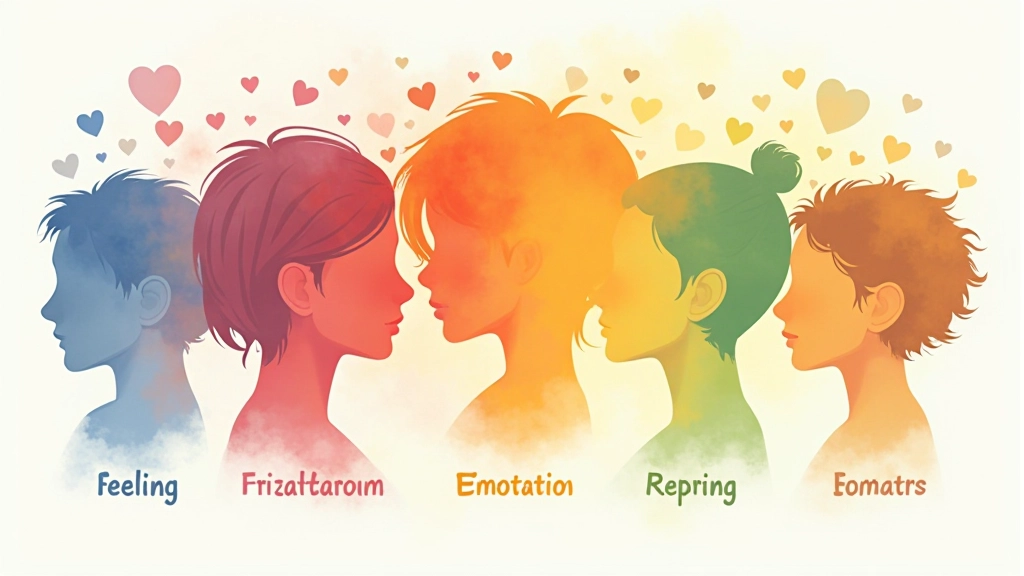
Building Your Emotional Palette: A Simple Framework
Start with what you’ve got. Most people can recognize three basic emotional families: pleasant, unpleasant, and neutral. But within each family, there’s incredible variety.
In the pleasant category, there’s not just “happy.” There’s content, joyful, amused, grateful, peaceful, energized, proud, and hopeful. Each one feels different in your body. Each one points to something different you might need.
In the unpleasant category, there’s not just “bad.” There’s frustrated, disappointed, hurt, lonely, overwhelmed, worried, guilty, ashamed, and resentful. Again — each one is distinct. Frustration comes from blocked progress. Disappointment comes from unmet expectations. They need different responses.
The neutral category includes calm, focused, tired, bored, and curious. These aren’t negative, but they’re not positive either. They’re just states you pass through.
When you can place your feeling into one of these subcategories, you’ve already solved half the problem. You’re not lost in the fog anymore.
Three Practical Techniques to Expand Your Vocabulary
Technique 1: The Body Scan
Emotions live in your body before they reach your conscious mind. Tension in your chest might be anxiety. Heat in your face might be embarrassment or anger. Heaviness in your limbs might be sadness or exhaustion. When you’re trying to name a feeling, pause and notice: Where do you feel it? What does it feel like? Temperature? Tightness? Weight? This physical information narrows down which emotion you’re actually experiencing.
Technique 2: The Intensity Scale
Rate your feeling from 1-10. A 2 might be “mildly irritated” while a 7 might be “furious.” This isn’t just helpful for communicating — it helps you recognize that what you’re feeling isn’t all-or-nothing. You can feel a little jealous, moderately frustrated, or deeply grateful. The intensity changes the word you choose. You’re building a richer emotional vocabulary just by acknowledging degrees.
Technique 3: The Emotion Trigger Question
Ask yourself: “What happened right before I felt this?” Frustration often follows blocked goals. Guilt often follows a choice you regret. Loneliness often follows disconnection. The trigger tells you the emotion’s name. Over time, you’ll recognize patterns. You’ll know that when you get interrupted mid-task, frustration is coming. When you’re left out of a group, loneliness or hurt is likely. This prediction gives you power to respond before the emotion overwhelms you.

From Vocabulary to Communication
Here’s where it gets powerful: once you can name what you’re feeling, you can communicate it. Instead of “I’m fine” (which nobody believes), you might say “I’m feeling a bit overwhelmed right now” or “I’m disappointed about how that turned out.” Suddenly the other person understands. They know how to help. The conversation becomes real.
You’re also less likely to let emotions build up. If you can say “I’m starting to feel frustrated” at the 3-level, you can address it before it becomes rage at the 8-level. You’re giving yourself room to work with the emotion rather than being consumed by it.
This is why emotional literacy matters. It’s not self-indulgent. It’s practical. It changes how you relate to yourself and how you connect with others. Your relationships improve because you’re clearer. Your stress decreases because you’re responding to actual feelings instead of vague dread. Your decision-making sharpens because you understand what you actually need.
Start Small, Build Over Time
You don’t need to learn a hundred new emotion words this week. Pick three emotions you experience regularly but struggle to name precisely. Spend the next week really paying attention to those three. Notice when they arrive. Notice where you feel them. Notice what triggered them. By the end of the week, you’ll have moved from vague awareness to real recognition.
Then add three more. This is a practice that compounds. In a few months, you won’t think twice about distinguishing between resentment and regret, or between contentment and excitement. Your emotional world becomes richer, clearer, and more navigable. And that changes everything.